
Returning to work while breastfeeding can bring a mix of emotions. You may feel excited to return to your career while feeling anxious about leaving your baby in someone else’s care. One of the biggest concerns many breastfeeding mothers have is whether their baby will continue to breastfeed successfully once daycare begins.
The good news is that with a clear plan and open communication, you can still have a strong breastfeeding journey!. One of the most important tools you can have is a feeding plan that everyone caring for your baby understands.
Start With a Conversation
Every daycare has experience feeding babies, but not every caregiver is familiar with how breastfeeding differs from formula feeding. Breastfed babies often eat differently from formula-fed babies, and it is your role to advocate for what is normal for your child’s individual feeding and nutritional needs.
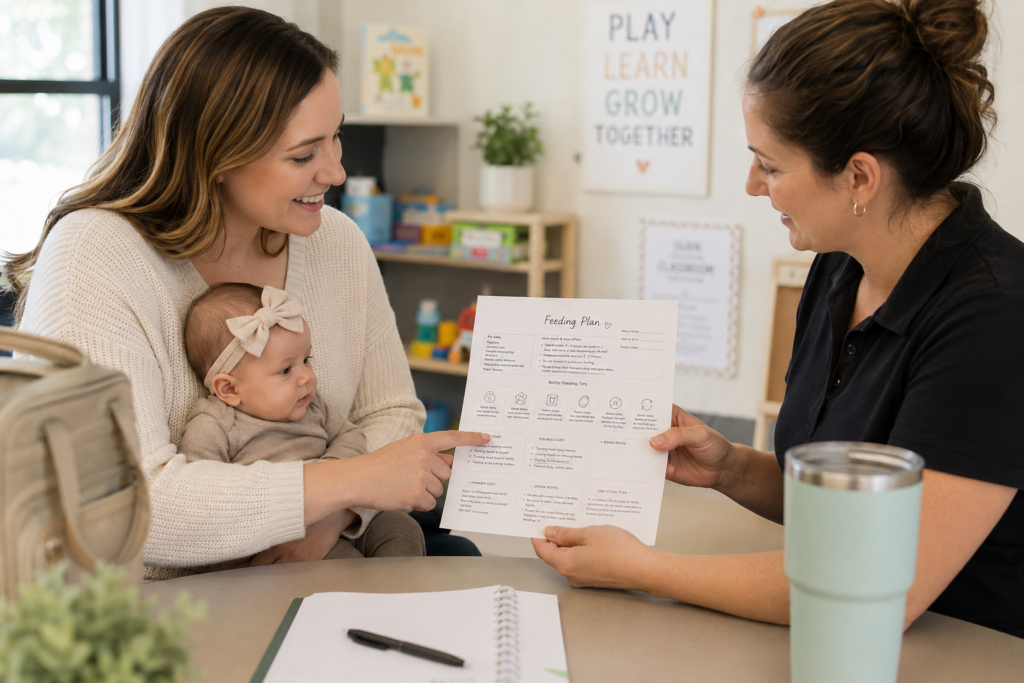
Before your baby’s first day, schedule a conversation with the caregivers who will be feeding your baby. Walk through your expectations, answer questions, and explain that your goal is to support your breastfeeding relationship while you’re apart. Have a hard copy of your feeding plan, and ask to keep it in your child’s milk storage area. This can help answer common questions the caregiver may have.
You know your baby best, and it is appropriate to provide instructions for your child’s caregivers to follow.
Create a Simple Feeding Plan
Having a written feeding plan helps ensure consistency, even if different staff members care for your baby throughout the day.
Your plan might include:
- How many ounces baby typically eats per feeding
- Approximately how often your baby eats
- Hunger cues to watch for before offering a bottle
- Instructions for paced bottle feeding
- Storage and handling instructions for breast milk
- What to do if your baby seems hungry after finishing a bottle
- When/how to contact you with questions
Breastfed babies often take 1–1.5 ounces of breast milk per hour when they are separated from their mother. While every baby is different, many babies do well with a 3–4 ounce bottle every 2½–4 hours, depending on their age and regular nursing routine.
Offering excessively large bottles can sometimes lead to overfeeding, increased spit-up, unrealistic pumping demands on mom, and babies who are less interested in nursing when reunited.
Paced Bottle Feeding Matters
One of the best ways daycare can support breastfeeding is by practicing paced bottle feeding.
Paced feeding slows the flow of milk, allowing babies to recognize their own fullness cues just like breastfeeding.
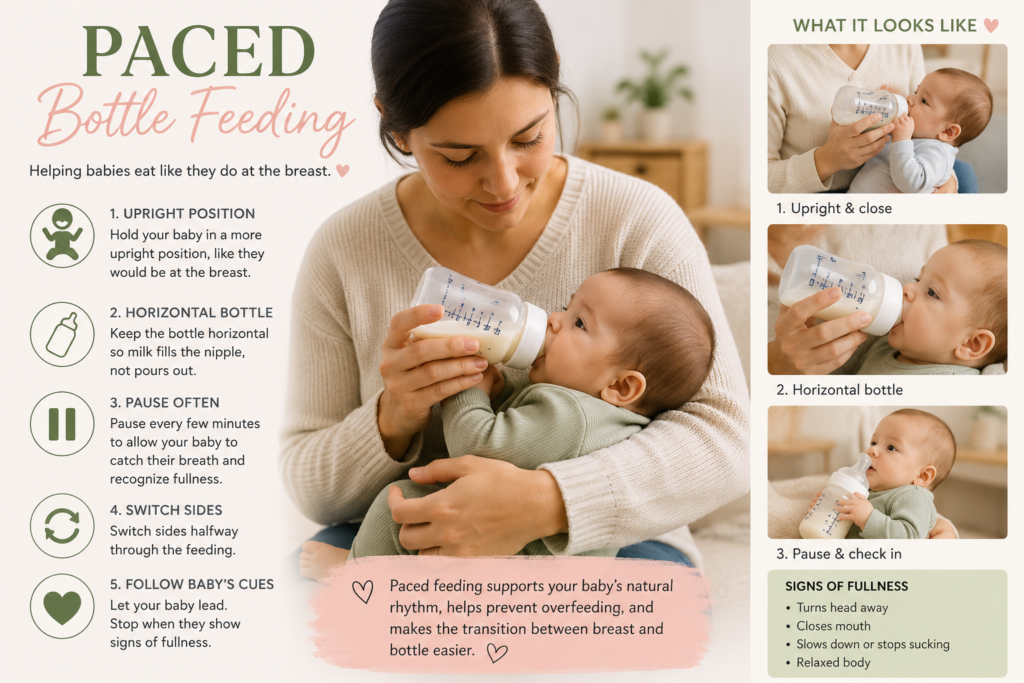
Encourage caregivers to:
- Hold baby in a more upright position.
- Hold the bottle horizontally instead of tipping it straight up.
- Allow baby to draw the nipple into their mouth actively.
- Pause every few minutes to give baby time to recognize fullness.
- Switch sides halfway through the feeding, similar to switching breasts.
- Never encourage a baby to finish the entire bottle if they are showing signs of being full.
Paced feeding not only helps prevent overfeeding but also makes transitioning between breast and bottle much easier for many babies.
Feed Before Drop-Off
One simple way to help your day go more smoothly is to nurse your baby immediately before leaving for daycare.
Even if your baby nursed an hour earlier, offering the breast again before drop-off often helps them leave feeling satisfied and connected. This can also allow daycare to wait a little longer before needing the first bottle, helping your milk supply stay more aligned with your baby’s needs.
Many moms find this nursing session becomes one of the sweetest parts of their daily routine.
Breastfeed as Soon as You Reunite
One of the greatest benefits of breastfeeding is reconnecting after time apart.
If possible, try to nurse your baby shortly after pickup. This feeding provides comfort, hydration, nutrition, and helps maintain your milk supply.
For this reason, don’t hesitate to ask your daycare to avoid giving a bottle if pickup is approaching.
For example, if your baby typically nurses well when you arrive and you’ll be there in 20–30 minutes, it’s completely reasonable to ask caregivers to hold off on offering another bottle if your baby is content and not showing strong hunger cues.
Many parents worry they’ll sound “high maintenance,” but you’re simply making a feeding choice that supports your breastfeeding goals.
Of course, if your baby is clearly hungry and distressed, they should absolutely be fed. A feeding plan isn’t meant to ignore your baby’s needs, it is meant to work with them.

Communication Is Key
Breastfeeding is not a “set it and forget it” process. Babies grow, feeding patterns change, and your pumping output may fluctuate throughout the year.
Check in regularly with your daycare staff.
Ask questions like:
- How much did my baby actually drink today?
- Did they seem satisfied after bottles?
- Were there any feedings they didn’t finish?
- Did they seem hungrier than usual?
- How long did each feeding take?
Likewise, keep them updated if your baby starts solids or if your home feeding routine has changed and will impact or change their current feeding plan
Working as a team creates consistency for your baby and reduces stress for everyone involved.
Give Yourself Grace
The transition to daycare is an adjustment for both mom and baby!
Some babies reverse cycle and prefer to nurse more often at home after daycare. Others take smaller bottles during the day and make up for it by breastfeeding more in the evenings and overnight. Both can be completely normal.
Remember that breastfeeding is about far more than ounces. Every nursing session before daycare, after pickup, during the night, and on weekends continues to strengthen your bond and support your baby’s health.
You are Your Baby’s Best Advocate
You don’t have to choose between daycare and a successful breastfeeding relationship. With thoughtful planning, respectful communication, and caregivers who understand your goals, your baby can continue to thrive on breast milk while you are apart.
If you’re preparing for daycare and feel unsure about where to begin, need help creating a personalized feeding plan, or are struggling with pumping and bottle feeding, an IBCLC can help address all of your concerns and build a feeding plan tailored to your specific breastfeeding goals and expectations for your baby while being cared for by someone outside of yourself.. Together, we can create a plan that supports your milk supply, honors your breastfeeding goals, and gives you confidence as your family enters this new season.

For help navigating breastfeeding difficulties or concerns, schedule a one on one visit with your local International Board Certified Lactation Consultant. At Breastfeeding Counselor, I offer a variety of services to fit into any lifestyle!
- 💻 Virtual Consultations – Convenient breastfeeding support from the comfort of your home, no matter where you’re located.
- 🏡 In-Home Visits – Hands-on, one-on-one support in the comfort of your own home, allowing us to address feeding challenges in your baby’s familiar environment.
- 🤍 In-Office Consultations – A relaxed, welcoming space for comprehensive breastfeeding assessments, weighted feeds, pumping support, and personalized care plans.
- 👩👩👧 Breastfeeding Classes & Parent Education – Helping families feel prepared before baby arrives and supported throughout their breastfeeding journey.
Many families are also surprised to learn that breastfeeding support may be covered by insurance, making expert lactation care more accessible than ever.
Whether you’re preparing to return to work, navigating your baby’s first days at daycare, or simply looking for reassurance that you’re on the right track, I would love to walk alongside you every step of the way.
Schedule your consultation today, and let’s build a feeding plan that works for both you and your baby.

Recent Comments